🌿 Fall Vegetable Garden Planning Guide
When summer fades and temperatures begin to cool, many gardeners assume the growing season is over — but that’s far from true.
With the right plan, fall can be one of the most rewarding times of the year to grow fresh, flavorful vegetables. This Fall vegetable garden planning guide will walk you through everything you need to know — from choosing the right crops to preparing your soil for the cooler months.
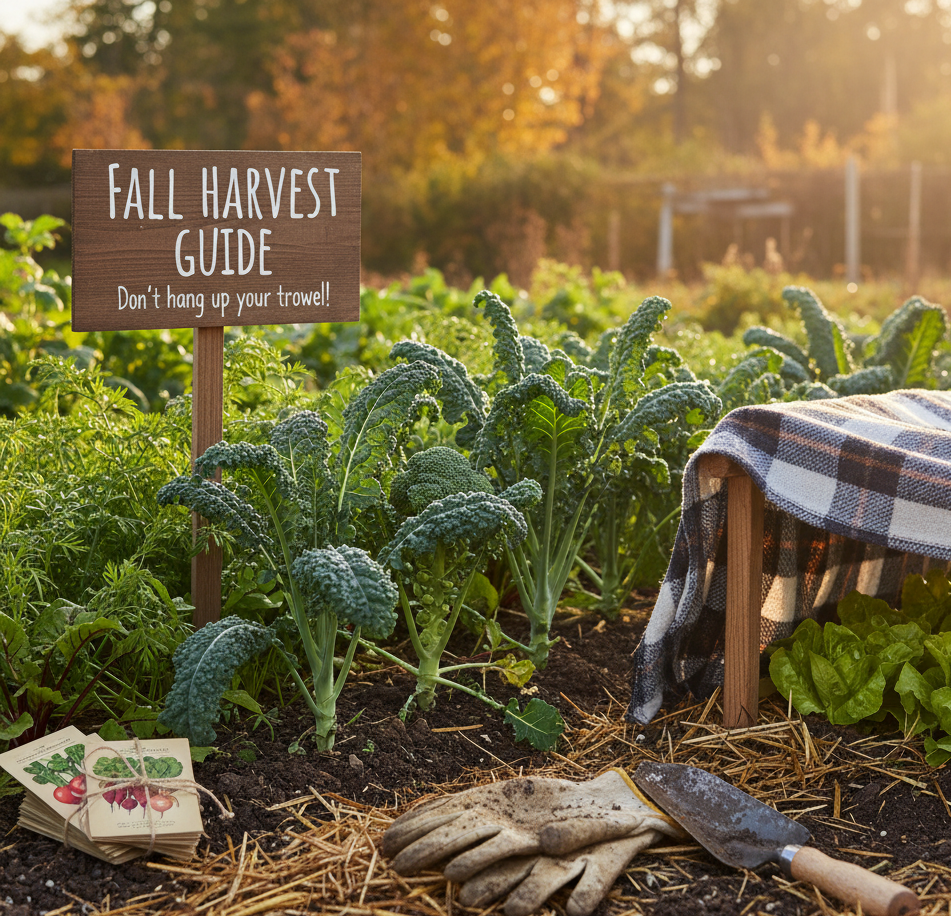
🍂 Why Plant a Fall Vegetable Garden?
Fall gardening has its perks.
Cooler weather means fewer pests, less watering, and sweeter-tasting produce. Many vegetables actually thrive in mild, consistent temperatures and even taste better after a light frost.
If you’ve never tried it before, fall gardening is your chance to extend your harvest season and make the most of your garden space before winter sets in.
🧭 Step 1: Planning Your Fall Vegetable Garden
A successful fall garden begins with smart planning.
Here’s how to get started:
- Check Your First Frost Date:
Find out when the first expected frost occurs in your area. You’ll need to plant 6–8 weeks before that date. - Choose Fast-Maturing Varieties:
Since fall days are shorter, pick vegetables that mature quickly such as radishes, lettuce, spinach, kale, and carrots. - Use Succession Planting:
Replace summer crops (like beans or cucumbers) with new fall ones. This keeps your beds productive all season.
🥕 Step 2: Best Vegetables for Fall Planting
The secret to a successful autumn harvest is choosing crops that love cooler weather.
Below are some top choices for your Fall vegetable garden planning guide:
- Leafy Greens: Spinach, kale, lettuce, mustard greens, and Swiss chard
- Root Vegetables: Carrots, radishes, turnips, and beets
- Cruciferous Crops: Broccoli, cauliflower, cabbage, and Brussels sprouts
- Alliums: Garlic, onions, and shallots (plant in late fall for a spring harvest)
- Legumes: Peas and fava beans add nitrogen to the soil and enrich it naturally
Tip: Start some crops indoors to transplant once the weather cools.
| Crop Category | Examples | Planting Time (Relative to First Frost) | Notes |
| Fast-Growing Greens | Arugula, Spinach, Lettuce (leaf varieties), Radishes, Mustard Greens | 6-8 weeks before frost | Perfect for succession planting. Sow a new batch every two weeks for a continuous harvest. |
| Hearty Root Veggies | Carrots, Beets, Turnips, Kohlrabi, Parsnips | 8-12 weeks before frost | Loosen the soil deep down to allow for good root development. Flavor improves after a light frost. |
| The Brassica Family | Broccoli, Cauliflower, Kale, Cabbage, Brussels Sprouts, Collards | 10-14 weeks before frost (often started indoors mid-summer) | These are heavy feeders. Ensure your soil is rich in nutrients. Kale is exceptionally cold-hardy. |
| Overwintering Crops | Garlic, Shallots, Overwintering Onions | 4-6 weeks before the ground freezes | Plant these in mid-to-late fall for a fantastic harvest the following summer. |
🌾 Step 3: Preparing the Soil for Fall Planting
Healthy soil equals healthy plants.
After pulling out your summer crops:
- Remove debris and weeds.
- Add compost or aged manure to restore nutrients.
- Loosen compacted soil with a garden fork or tiller.
- Consider adding a balanced organic fertilizer for an extra boost.
This step ensures your soil has enough nutrients to sustain another growing cycle.
💧 Step 4: Watering and Mulching for Fall Vegetable Garden
Fall weather can be unpredictable.
Even though it’s cooler, young seedlings still need consistent moisture.
- Water deeply once or twice a week, depending on rainfall.
- Mulch around plants with straw or leaves to retain moisture and insulate roots against cold nights.
This simple step helps stabilize soil temperature and suppress weeds.
🪴 Step 5: Protecting Your Fall Garden from Frost
As nights get colder, protect your plants with:
- Row covers or frost blankets
- Cold frames or mini greenhouses for tender crops
- Raised beds, which warm up faster than ground soil
You don’t need expensive gear — even old sheets or plastic covers can help shield plants from a surprise frost.
🌱 Step 6: Extending the Season
If you want to harvest well into winter, use succession planting and season extenders:
- Plant hardy greens like kale and spinach in intervals every two weeks.
- Use hoop houses or cloches to trap warmth.
With a bit of planning, your fall vegetable garden can keep producing until early winter.
🧺 Step 7: Harvesting and Enjoying Your Autumn Crops
Most fall vegetables can be harvested multiple times — especially leafy greens.
Pick outer leaves first and let the inner ones grow. Root crops like carrots and beets can stay in the ground until the first hard freeze — they’ll even become sweeter after light frost exposure.
Enjoy your hard work by creating fresh soups, stews, and salads with your homegrown produce!
🌻 Final Thoughts on the Fall Vegetable Garden Planning Guide
Fall is the season of abundance, not an ending.
With the strategies in this Fall vegetable garden planning guide, you can make the most of shorter days and cooler weather to grow nutrient-rich, flavorful vegetables.
So grab your gloves, turn over that soil, and start planting — because the most satisfying harvests often come after summer ends.